Ux & user research
This section highlights my ability to understand user needs through qualitative and quantitative research methods and translate those insights into actionable design and content decisions. It reflects my experience conducting usability studies, developing personas, and creating wireframes that support user-centered digital experiences.
Usability Report
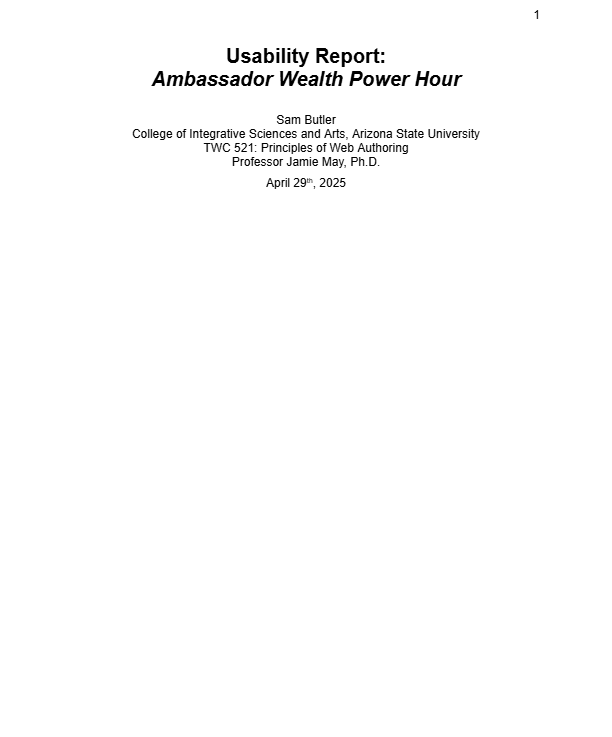
This usability evaluation and report demonstrate my ability to assess and improve digital experiences through user-centered methods. I conducted a mixed-method usability study on the Ambassador Wealth Power Hour website, combining open-ended survey responses with live observation via FaceTime. This approach allowed me to capture both explicit feedback and subtle behavioral cues, such as hesitation or disengagement, providing a more holistic understanding of user experience. I developed three detailed user personas based on participant backgrounds and interactions, representing a range of technological comfort levels and audience relevance. Through this process, I evaluated how effectively users could understand the site’s purpose, navigate content, access radio episodes, and engage with the advisor. My findings highlighted key strengths, such as intuitive navigation, clear purpose, and strong visual hierarchy, while also identifying areas for improvement, including perceived audience exclusivity, limited streaming accessibility, and missed opportunities for user engagement.
Strengths Acquired:
Rhetorical Knowledge: Applied user-centered design principles to align usability insights with audience and stakeholder needs
Critical Thinking, Analysis, and Research: Conducted and synthesized mixed-method usability research to generate actionable insights
Practices and Processes: Communicated complex findings clearly through a structured, audience-appropriate report
Technology: Leveraged and evaluated digital tools to conduct remote testing and enhance user experience
USER pERSONAS
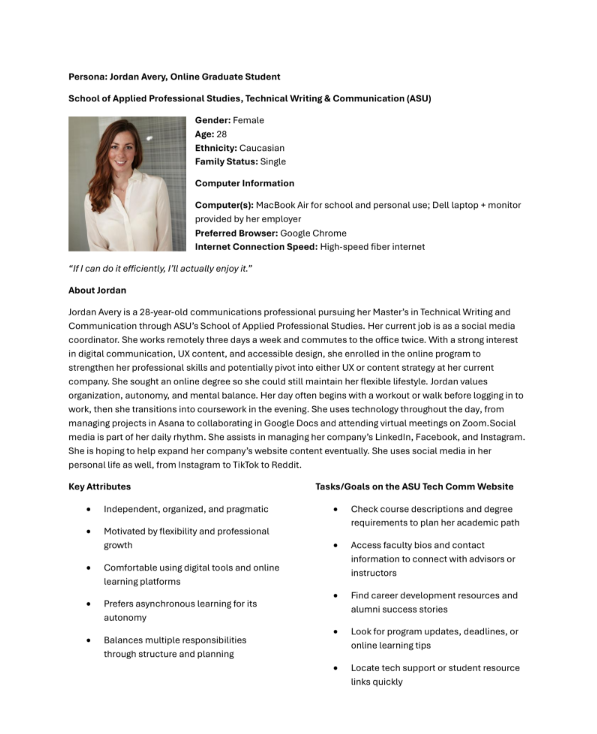
These three personas demonstrate my ability to translate research and content analysis into audience-centered design tools that inform communication strategy. For the ASU Technical Communication website, I developed Jordan Avery as a representative online graduate student to guide design decisions in Figma mockups. This persona helped clarify the expectations, behaviors, and goals of a digitally fluent learner navigating an asynchronous graduate program. For the Wool2Dye4 website, I created Gabe as a beginner male crafter whose needs highlighted gaps in clarity, accessibility, and inclusivity within product content and instructional language. Then, for a hypothetical La Roche-Posay melanoma awareness campaign, I developed a detailed audience profile through the persona of Becca to guide health communication strategy and channel selection.
Across these projects, I strengthened my ability to segment audiences based on goals, behaviors, and contextual needs, rather than relying on generalized assumptions. Each persona reflects a different dimension of user experience: Jordan emphasizes efficiency, autonomy, and digital fluency in an online academic environment; Gabe highlights accessibility, clarity, and inclusivity for novice crafters entering a specialized space; and Becca reflects lifestyle-driven motivations, emotional barriers, and health-related decision-making in a consumer wellness context. Together, these profiles demonstrate my ability to adapt tone, messaging, and content strategy to meet distinct audience expectations across academic, commercial, and public health contexts.
Strengths Acquired:
Rhetorical Knowledge: Developed audience-centered personas to guide tone, messaging, and communication strategy across contexts
Critical Thinking, Analysis, and Research: Synthesized research and content analysis into actionable user profiles grounded in behavioral and demographic insights
Practices and Processes: Applied persona development to inform UX decisions, content strategy, and design workflows
Technology: Utilized digital tools (e.g., Figma) to translate audience insights into practical design applications
Picture provided by Canva stock photos
survey & interview design
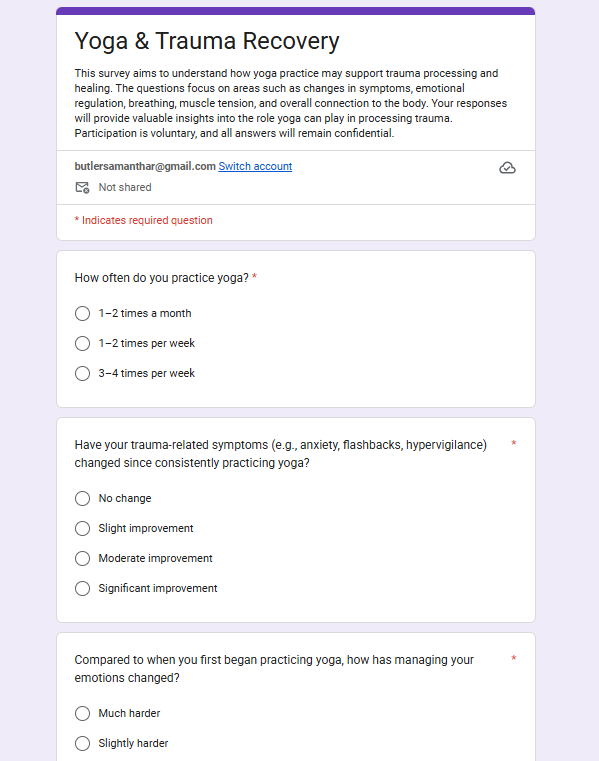
This survey and interview design project demonstrates my ability to translate a research question into structured qualitative and quantitative data collection tools. Grounded in my inquiry of how yoga supports trauma processing, I developed both a survey (Google Forms) and a semi-structured interview guide to capture a range of participant experiences, from measurable changes in symptoms to more nuanced, narrative accounts of embodiment, emotional regulation, and body awareness.
This work strengthened my understanding of how different research methods generate different kinds of knowledge. The survey allowed me to gather scalable, structured data on perceived changes in trauma-related symptoms, while the interview questions were designed to elicit deeper lived experiences and contextual meaning. Together, these tools reflect my ability to move beyond surface-level findings and toward more textured, human-centered insight.
Strengths Acquired:
Rhetorical Knowledge: Designed research instruments with sensitivity to audience, context, and emotionally complex subject matter
Critical Thinking, Analysis, and Research: Developed and applied qualitative and quantitative methods to generate both structured data and in-depth insights
Practices and Processes: Created clear, effective survey and interview tools to support meaningful data collection and analysis
Technology: Utilized digital platforms (e.g., Google Forms) to design, distribute, and manage research instruments
Figma Wire Frames
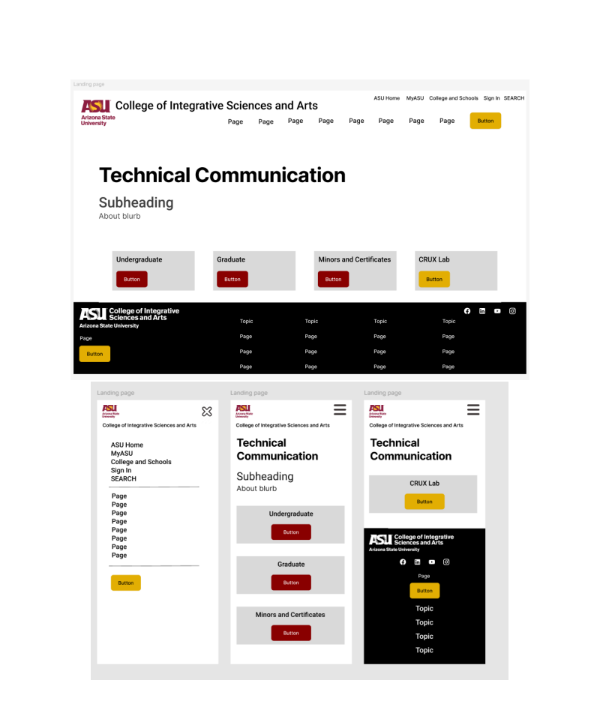
This Figma wireframing project for Arizona State University’s Technical Communication (MSTC) program webpage demonstrates my ability to translate existing digital content into structured, user-centered interface designs across both desktop and mobile formats. I created low-fidelity wireframes that aligned with ASU’s branding guidelines while ensuring that all essential content elements were preserved and logically organized. This required careful attention to information hierarchy, navigation flow, and responsiveness across devices, as I adapted the same content structure to meet the different constraints and user expectations of desktop and mobile experiences. The goal of the wireframes was to improve clarity, accessibility, and usability while maintaining consistency with the original site’s purpose and institutional identity.
This project strengthened my ability to apply rhetorical knowledge by analyzing how genre conventions and layout choices shape user interaction with academic web content, while also emphasizing the importance of user-centered design in structuring information for clarity and ease of navigation. In terms of practices and processes, I developed iterative design strategies by drafting, refining, and reorganizing wireframes to improve usability and content flow across multiple screen sizes. I also demonstrated an understanding of multimodal communication by balancing visual hierarchy, spacing, and content prioritization to support effective user engagement. From a technology perspective, I strengthened my proficiency in Figma as a design tool, learning to use it for structured wireframing, layout planning, and responsive design considerations. Overall, this work reflects my growth in content strategy, interface design, and the ability to create user-centered digital experiences that are both functional and aligned with brand and institutional standards.
Strengths Acquired:
Rhetorical Knowledge: Analyzed genre conventions and applied user-centered design principles to structure academic web content for clarity and usability
Critical Thinking, Analysis, and Research: Evaluated information hierarchy, navigation flow, and responsive constraints to improve user experience across devices
Practices and Processes: Developed iterative wireframing strategies to refine layout, content organization, and usability across desktop and mobile formats
Technology: Strengthened proficiency in Figma to create structured, responsive wireframes and support interface design decisions